
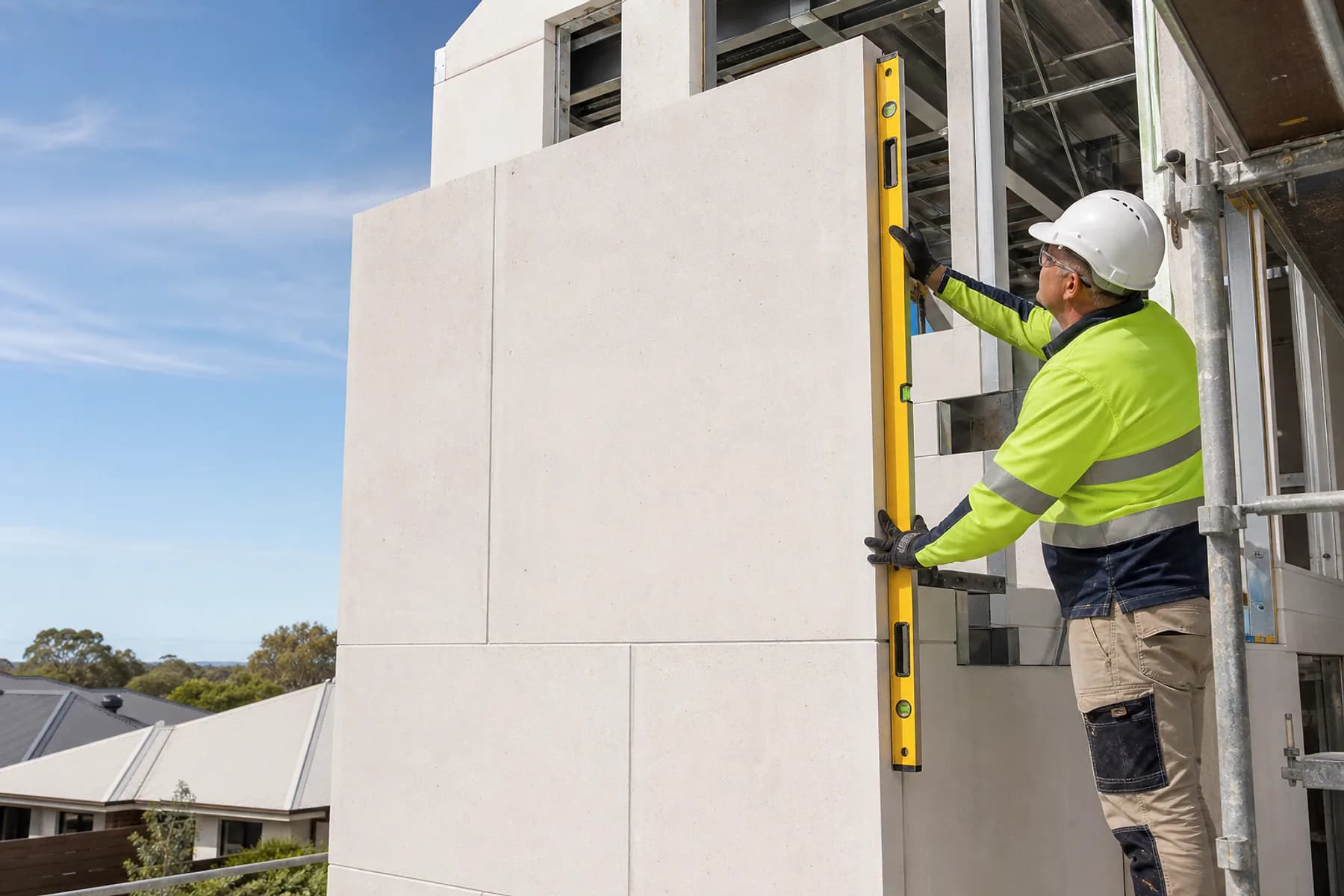
Can Hebel Be Rendered? What to Confirm Before an Adelaide Project
The short answer
Yes—selected Hebel wall systems can receive compatible render, texture or coating finishes. The safe specification depends on the exact Hebel product, application, wall details and exposure; “render over Hebel” is not one universal build-up.
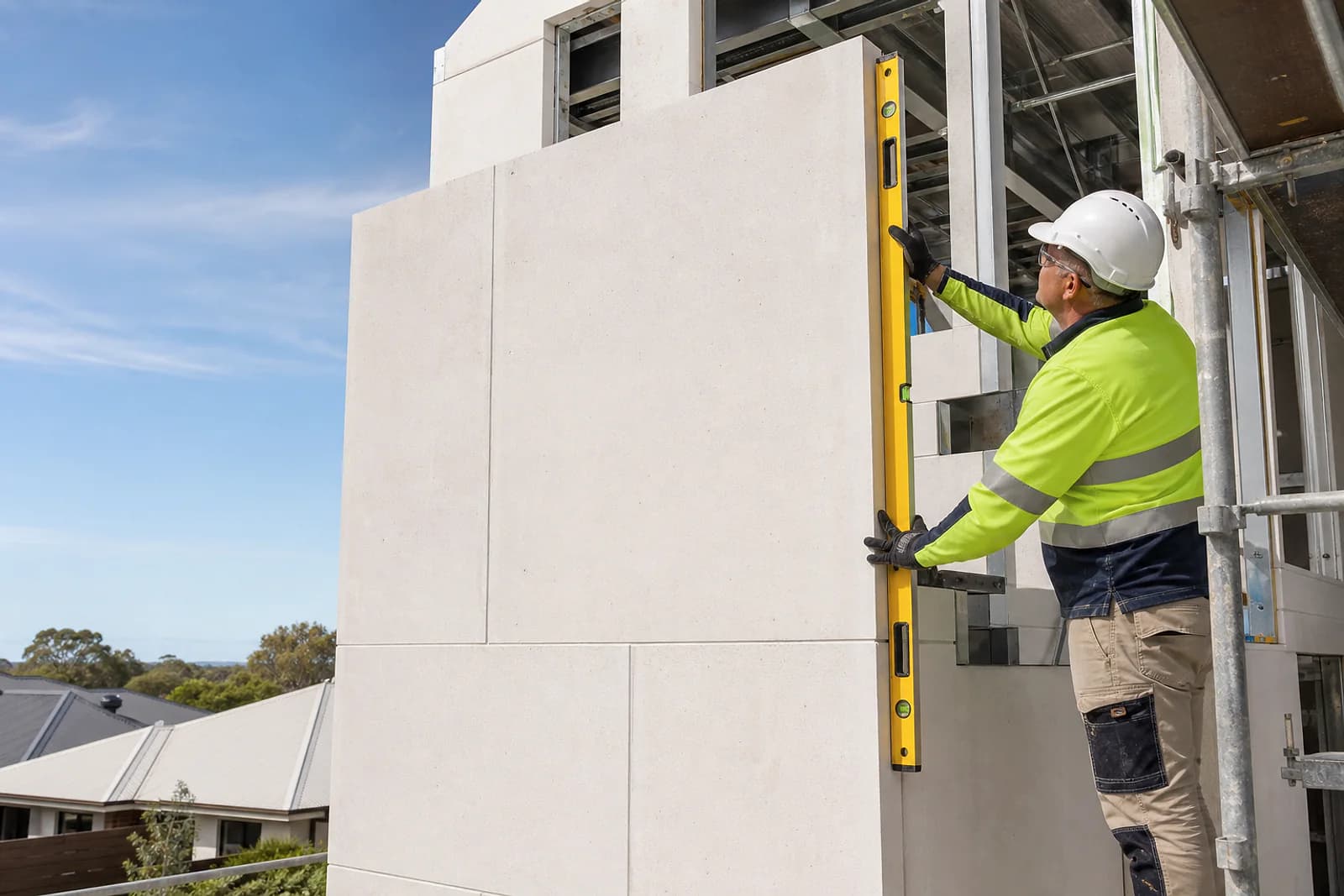
Hebel is a product family, not one interchangeable panel
Hebel® is a registered trademark for autoclaved aerated concrete products supplied in Australia by CSR Building Products. Autoclaved aerated concrete is commonly shortened to AAC. CSR publishes different systems for external walls, internal walls, floors, fences and other applications, with product-specific design and installation information.
Before discussing a finish, confirm the product name and the application shown in the current project documents. A detail written for one panel, block or wall application should not be transferred to another because the visible material looks similar.
Useful evidence can include the architectural elevations, system schedule, engineer’s details, relevant Hebel design and installation guide, coating specification and any approved project-specific details.
If the drawings describe a zero-boundary, dual zero-boundary or intertenancy application, first use our Hebel boundary-wall planning guide to confirm the wall terminology, approved evidence, access and trade responsibilities. Those configurations are not interchangeable simply because they use AAC panels.
Sources: CSR Hebel PowerPanelXL product information and CSR Hebel technical documents.
Coordinate the wall before choosing its appearance
A finished Hebel wall is more than the visible texture. Framing, support components, panels, fixings, joints, openings, flashings, sealants and coatings have to work together under the documented design. A neat surface cannot compensate for unresolved details behind it.
CSR’s PowerPanelXL design and installation guidance shows why the exact system matters: it addresses project design, building setout, wind design, framing, openings, control joints, flashings, sealants and coatings. Confirm the applicable guide version through CSR’s technical-document library; the project requirements still come from that guide and the approved drawings.
- Exact Hebel product and wall application
- Current architectural, structural and system details
- Frame and substrate readiness before panel installation
- Openings, penetrations, corners and adjoining materials
- Documented movement or control-joint locations
- Flashings, sealants and water-management interfaces
- Specified coating system and required surface condition
- Access, sequencing and responsibility for each trade interface
Do not assume a coating can hide or replace a required movement detail. If drawings, product documents or trade scopes conflict, resolve the conflict with the responsible designer, builder and suppliers before either panel installation or coating proceeds.
Source: CSR Hebel PowerPanelXL Design and Installation Guide, HELIT016AUG26 (PDF).
What the coating specification should make clear
On site, “render” can be used loosely for several different layers or appearances. CSR’s coatings information refers to approved finishes and acrylic coating systems, and points to coating suppliers with their own system documents. The project specification should identify the complete finish rather than a generic bag of render.
- The confirmed Hebel substrate and its permitted finish system
- Required preparation and acceptance criteria before coating
- Specified base, levelling, reinforcement, texture and topcoat layers where applicable
- How panel joints, control joints, corners and openings remain detailed
- Selected texture, colour and any documented colour limitations
- Application conditions, inspection points and curing requirements from the current product data
- Maintenance information and handover records for the chosen finish
Dulux AcraTex is one example of a supplier that publishes substrate, application and care guides for multi-layer coating systems. Its documents apply only when that supplier and system have actually been selected. They are not generic instructions for every Hebel wall or every brand of coating.
Sources: CSR Hebel coatings and finishes and Dulux AcraTex systems and guides.
Define who owns each decision and interface
The same company may hold more than one role, but the written scope should still make each responsibility visible. A practical responsibility check can look like this:
- Designer and engineer
- Specify the suitable wall system, performance requirements and project details for the particular building. Product literature does not replace project design.
- Building certifier
- Assess the evidence and approvals required for the project within the certifier’s role. Certification does not replace design by the responsible practitioners.
- Builder or project manager
- Issue current documents, coordinate frame and substrate readiness, manage access and sequencing, and resolve clashes between trades before they are concealed.
- Hebel installer
- Install the agreed panel or block scope to the selected system documents and project details, while recording any unresolved condition that prevents the work from following the issued details.
- Renderer or coating applicator
- Confirm substrate acceptance, use the specified compatible coating system and preserve the documented joints and interfaces within the finishing scope.
- Product and coating suppliers
- Provide current technical data, compatibility information, care guidance and any applicable warranty conditions for the exact products selected.
South Australian building requirements and transition arrangements can change. Confirm the current rules and approvals for the project with the responsible building professionals, using PlanSA’s current Building Code information as a starting point.
Source: PlanSA Building Code information.
Compare the scope—not only the final price
Two quotations can appear to describe the same wall while assigning very different work to the builder, installer and renderer. Ask each quote to identify its assumptions and exclusions so the project team can compare like with like.
- Panel or block product, application and documented system
- Who supplies panels, accessories, coatings and consumables
- Who confirms framing and substrate readiness
- Included openings, junctions, flashings, sealants and movement details
- Cutting, waste handling, scaffold or other access responsibilities
- Whether coating preparation and every specified finish layer are included
- Protection, inspection, rectification and handover responsibilities
- Known exclusions and information still needed before price or timing is final
Our project-planning guide lists the plans, photos, programme and access information that can help turn an early enquiry into a clearer scope.
Sources: SafeWork SA respirable crystalline silica guidance and CSR Hebel safety information.
Existing cracks or coating failure need a different starting point
A new-project specification cannot diagnose an existing wall. Cracking, open joints, moisture, movement, coating loss or corrosion may involve more than the visible finish. Record the pattern, history, weather exposure and surrounding building conditions before deciding whether the appropriate next step is product advice, a coating assessment, a building consultant or engineering input.
Our Adelaide render-cracking guide explains what to document and why the underlying cause should be understood before a cosmetic repair is proposed. Do not conceal a required joint or active defect beneath a new finish without an appropriate assessment.
Product, coating and workmanship cover can be separate
CSR’s current low-rise residential warranty describes product cover for eligible Hebel panels subject to its stated system, installation, maintenance and other terms. Its warranty material also distinguishes third-party coating products. A coating supplier or applicator may have separate eligibility, registration and maintenance conditions.
Ask for the actual documents that apply to the selected products and scope. Do not treat a headline warranty period as proof that the whole wall, coating or every trade’s work has identical cover.
Sources: CSR Hebel warranty information and Dulux AcraTex warranty information.
Keep enough information for the next decision
A useful handover record lets the owner, builder and future trades identify what is on the wall without guessing from appearance. Retain:
- Final drawings and the exact Hebel system or product schedule
- Approved project details and recorded departures or variations
- Coating specification, product data and colour references
- Installer, applicator and supplier contact details
- Applicable product, coating and workmanship warranty documents
- Inspection, maintenance and cleaning guidance current at handover
- Dated completion photographs of key elevations and visible joints
Common questions
- Can every Hebel product receive the same render?
- No universal specification should be assumed. Confirm the exact Hebel product and application, then follow its current system documents and the selected coating supplier’s compatible specification.
- Can render cover the panel joints?
- Joint treatment depends on the selected system and project details. Do not assume a finish can remove a documented movement or control joint; resolve its location and finish with the responsible project team before coating.
- Who selects the coating system?
- The decision may involve the designer, builder, Hebel and coating suppliers, installer and applicator. The written project documents should identify the selected compatible system and who is responsible for each layer.
- Are photos enough for a Hebel and render quote?
- Photos help show access and current conditions, but new work normally also needs plans, the selected wall system, finish specification, scope boundaries and programme information.
- Can Elite coordinate Hebel installation and rendering?
- Tell us which system documents and drawings are available and the proposed finish. We can arrange how to review supporting files, confirm whether the installation and coating work sit within our service scope and identify the information still needed for a quote; project design and certification remain with the responsible professionals.
Sources and further reading
- CSR Hebel
- Technical documents, coatings, safety and warranty information
- Dulux AcraTex
- Coating systems and guides and warranty information
- Government of South Australia
- PlanSA Building Code information and SafeWork SA silica guidance
Source pages reviewed 31 August 2026. Always check the current product, project and regulatory documents before work begins.