What Causes Render Cracking in Adelaide—and What Should You Do Next?
The short answer
Render can crack because the finish, the substrate or the building beneath it has changed. In Adelaide, seasonal ground movement can be one contributor where reactive clay is present—but preparation, moisture, junction detailing, curing and ageing can matter too.
Common reasons rendered walls crack
Several issues can create a similar line on the surface. The repair depends on which layer is moving or failing and whether that change is still active.
Movement in the wall, footing or ground
Render is comparatively rigid. Movement in masonry, framing, footings or foundation soil can transfer stress to the finish. Movement may be seasonal, related to settlement, concentrated at a junction between old and new work, or associated with changes in moisture around the building. South Australian guidance identifies soil movement as a frequent contributor to masonry cracking in older buildings, particularly across the Adelaide Plain.
Movement joints and material junctions
Articulation, control and expansion joints are intended to accommodate movement. Applying a rigid render or texture coat across one can simply relocate the stress into the finish. Window corners and junctions between different wall materials also deserve attention because the connected materials may move differently.
Sources: ABCB, NCC Housing Provisions Part 5.6 and Rockcote technical guidance on structural movement.
Substrate preparation, adhesion and curing
Render needs a suitable, sound substrate and the correct preparation for the selected system. Excessive substrate suction can draw water from cement render too quickly, interfering with hydration and contributing to early cracking or poor bond. Application limits and curing requirements vary by product, temperature, wind, humidity and wall condition, so the current system data must govern the work.
Source: Rockcote technical guidance on preparing brick substrates.
Moisture, ageing or failure within the finish
Ageing, atmospheric exposure, unsuitable previous coatings, corrosion and failure in the substrate or coating system can contribute to cracking, staining and facade degradation. These conditions do not all call for the same repair: a stable surface blemish is different from a crack continuing into the wall or a coating that has detached over a broad area.
Why Adelaide conditions may matter
Reactive clay swells as it gains moisture and shrinks as it dries. Where that soil is present beneath a building, seasonal moisture change can move footings and brittle masonry. South Australian guidance says some seasonal cracks in older masonry may be widest near the end of summer and close as moisture returns.
That does not mean every Adelaide render crack is caused by clay. Soil, footing design, construction type, drainage, nearby vegetation and the wall system all vary by property. A geotechnical report usually provides site classification, and movement-related work may require independent structural or geotechnical advice.
Sources: CSIRO, Foundation Maintenance and Footing Performance and the South Australian older-buildings guide.
What to record before requesting advice
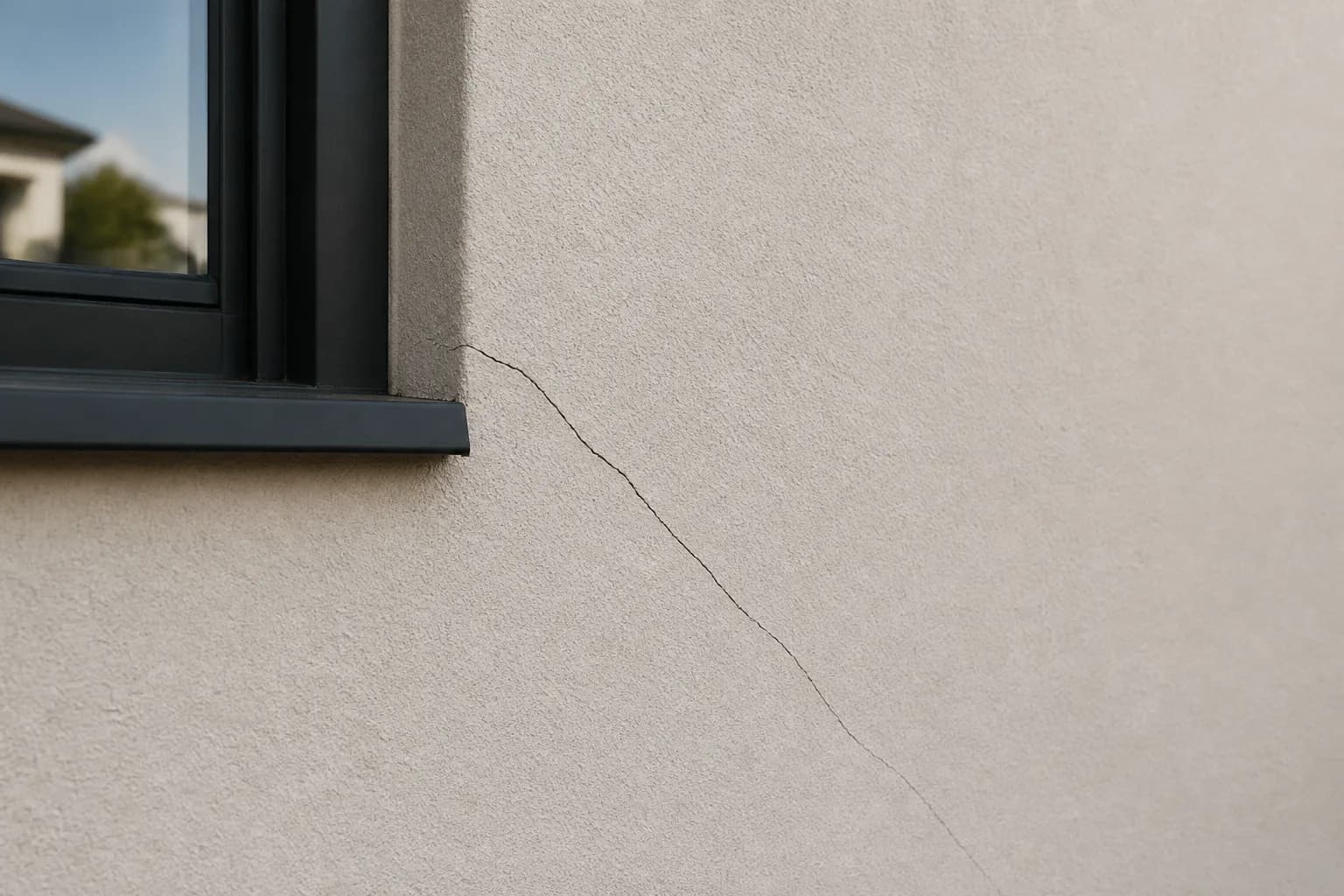
A repeatable record is more useful than a single close-up. Capture the surrounding wall as well as the line itself, then note anything that changes.
- A wide photograph showing where the crack sits on the wall
- Close photographs with the date and a repeatable scale or reference point
- The crack’s length, direction and whether it continues into masonry or appears on the other face
- Whether it opens, closes, spreads or reappears after a previous repair
- Nearby sticking doors or windows, sloping floors, displaced trim or other visible distortion
- Damp staining, failed sealant, leaking gutters or downpipes, ponding, plumbing changes or recent landscaping
- The wall construction, render or coating system and any previous repair details you can confirm
The SA Government includes cracked walls, sloping floors, damp, mould and blistering paint among signs worth checking during a property inspection, and recommends appropriately skilled independent inspection where structural soundness is in question.
Source: SA.GOV.AU, Inspecting a property.
Sensible next steps
Create a baseline
Record the crack and its context now. Repeat the same photos and measurements if monitoring is appropriate and the wall is safe.
Check only what is readily visible
Look for obvious leaks, damaged joints, ponding, failed window seals or recent site changes without excavating or disturbing the wall.
Avoid hiding an active symptom
Filling or painting over a moving crack can conceal useful evidence and may fail again. The underlying cause and movement status should guide the repair.
Match the assessor to the risk
Surface-finish problems, uncertain building movement and possible soil or footing issues call for different expertise.
Who should assess the crack?
- Experienced render or coating professional
- Appropriate when the issue is confirmed as stable and confined to the finish, and the substrate is sound, dry and well bonded.
- Independent building consultant or architect
- Useful when the construction, defect extent or cause is unclear and a broader building assessment is needed.
- Structural or civil engineer
- Arrange prompt assessment where cracking continues through the wall, changes or recurs, appears on both faces, affects structural continuity or accompanies wall, floor, door or window distortion.
- Geotechnical professional
- May be required where reactive soil, footing movement, drainage changes, erosion or significant tree effects are suspected.
- Older-building or heritage specialist
- Older masonry may need compatible materials and an understanding of lime mortars, salt attack and damp behaviour before work is specified.
Local repair or broader re-render?
A local repair may be reasonable when assessment confirms that the defect is confined to the finish, the substrate is sound and dry, movement has stopped or been controlled, joints remain functional and a compatible repair can be blended acceptably.
Broader removal or wall-to-wall refinishing may be more appropriate when adhesion failure is widespread, moisture remains active, many cracks recur, the previous coating is incompatible, joint detailing needs correction or a local patch cannot produce an acceptable finish. Active structural or substrate movement needs to be resolved before either option is treated as a durable repair.
Common questions
- Can I simply fill a hairline render crack?
- Not safely as a universal rule. A fine line may be limited to the coating, but appearance alone cannot show whether the substrate is moving. Record it, check the context and confirm the cause and stability before choosing a repair.
- Why does the same crack return after painting?
- Paint or filler may cover the visible line without addressing movement, moisture, failed adhesion or joint detailing beneath it. If the underlying condition remains active, the symptom can reappear.
- Can Elite diagnose the cause from one photograph?
- No. Photos are useful for initial context, but the wall, substrate, history and surrounding building conditions may need on-site or independent assessment before a repair scope is appropriate.
Sources and further reading
- South Australian Department for Environment and Heritage
- Maintenance and Repair of Older Buildings in South Australia (PDF)
- Australian Building Codes Board
- NCC Housing Provisions, Part 5.6 Masonry components and accessories
- SA.GOV.AU
- Inspecting a property
- Manufacturer technical guidance
- Rockcote: Structural Movement, Preparing Brick Substrates for Render and Dulux Acratex Facade Refurbishment