Render Finishes in Adelaide: Which Texture Suits the Wall You Have?
The short answer
Most render finishes come down to a smooth trowelled surface, a fine sand or float grain, or a coarser rolled or trowelled texture—plus one more decision about whether the colour sits in the render itself or in a coating over it. The look is the part people choose on. The grade is the part that decides how much of the wall behind it disappears, how readily the surface collects dust and salt, and how a patch will blend in five years.
The render finishes you will actually be offered
Manufacturers grade their texture ranges by surface profile and by how the product is applied—rolled, sprayed, or laid on with a hawk and trowel and floated. Names change between brands; the profile carries across all of them.
Smooth and trowelled
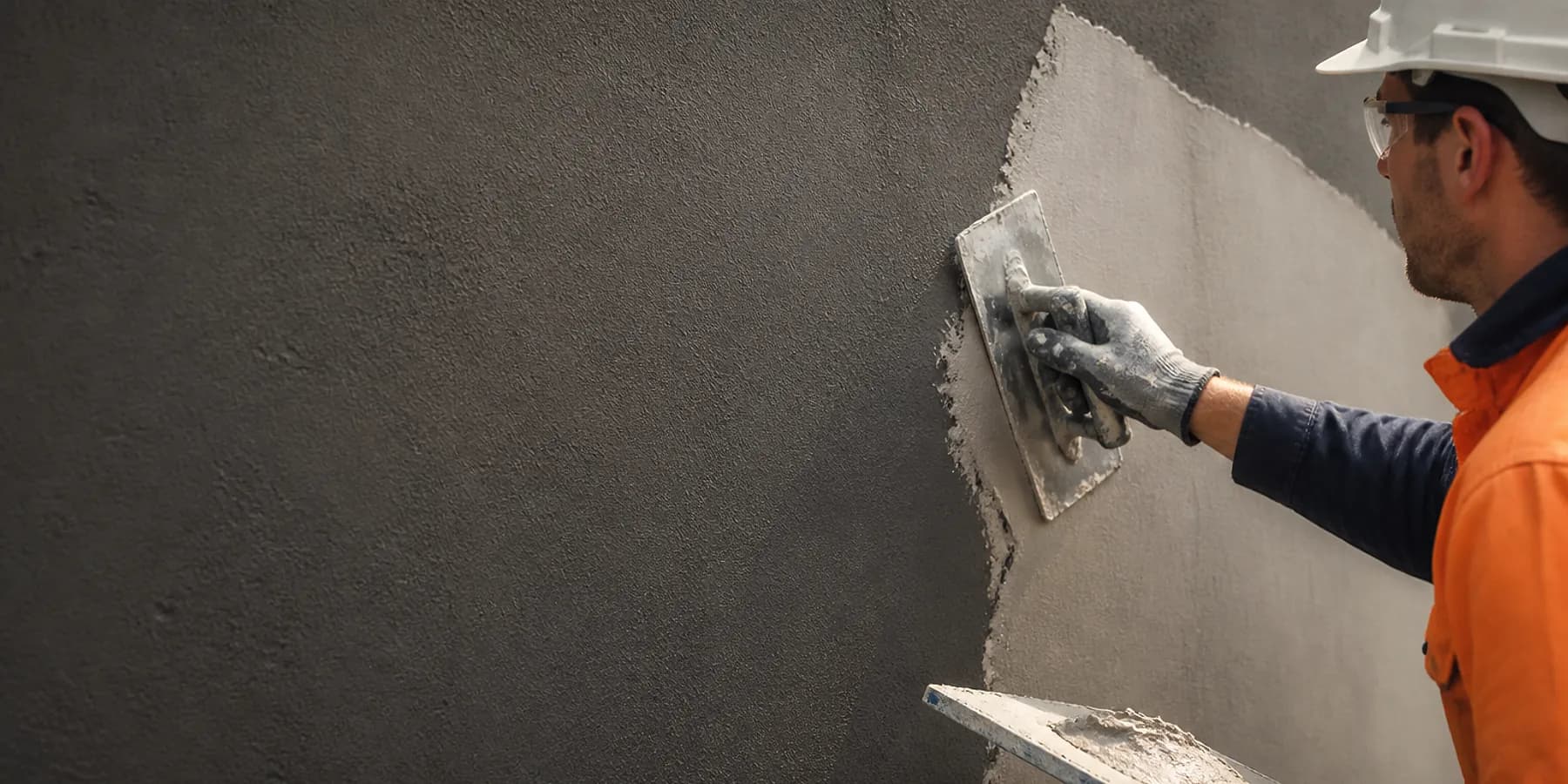
A smooth finish suits contemporary elevations where the eye is meant to follow an unbroken line. Rockcote’s homeowner guide describes smooth render as common in modern architectural work where clean lines and minimal detailing are wanted, and notes that textured finishes can instead add visual interest and help conceal minor substrate variations. That is the trade in one sentence: a smooth wall hides nothing. Set-out variations, a bowed course of brickwork and every hairline the substrate hands upward stay visible, and late sun raking across a western elevation will find all of them.
Sand, float and fine-grain textures
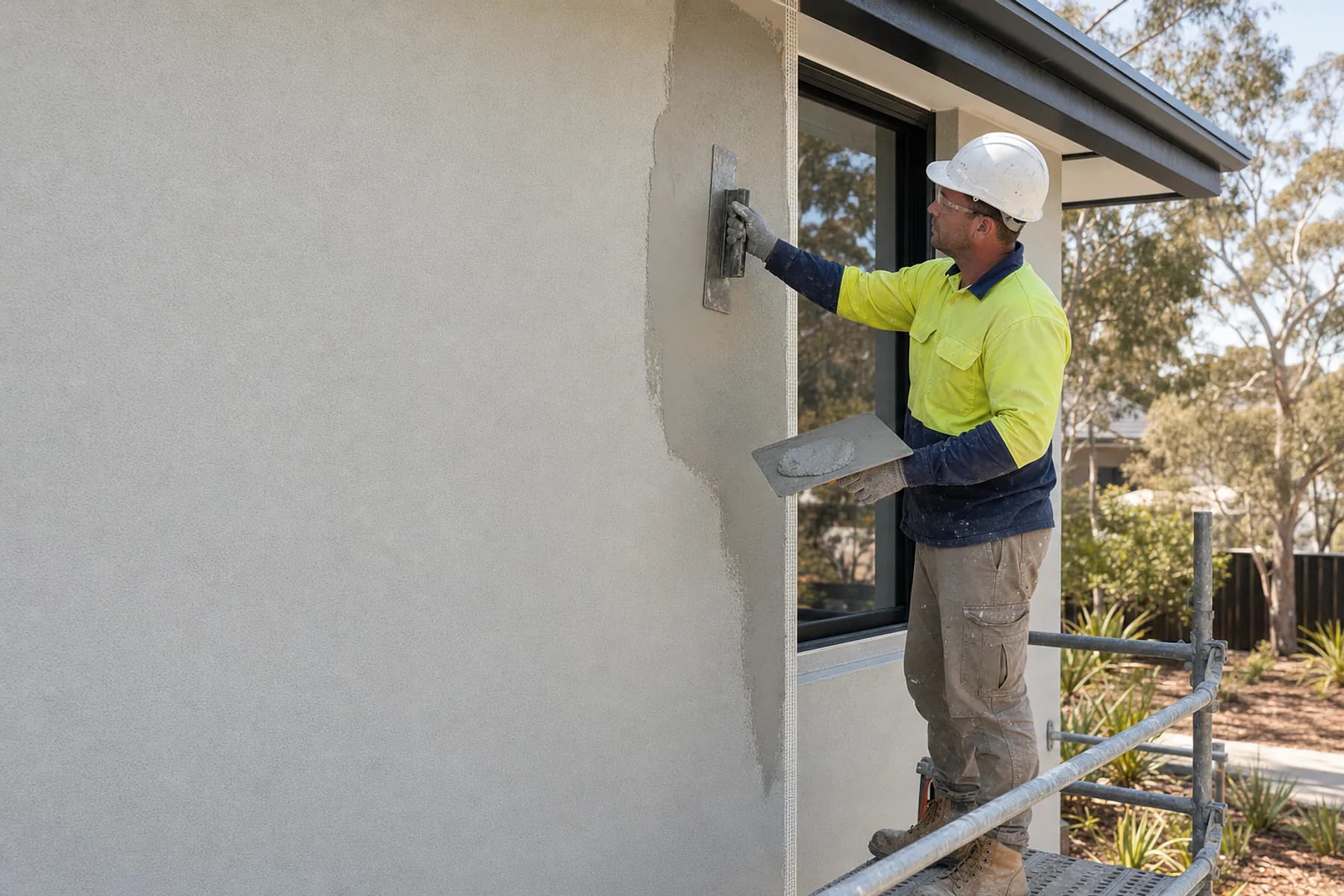
A fine grain scatters reflected light and takes the hard edge off what sits underneath, without reading as a “textured” wall from the street. Dulux’s AcraTex range is organised this way: the Tuscany finishes are fine-grain acrylic textures laid on by hawk-and-trowel plastering for a float render appearance, while SuperTrowel 2 mm is a high-build scratch-float finish with maximum substrate hiding power, trowelled on and finished with a polystyrene float. Fine grades are the usual compromise on an older masonry home that is not perfectly flat.
Coarse and rolled textures
Heavier profiles are rolled or trowelled at a greater film build and hide more. Rockcote describes its 100% acrylic polymer renders as applied in film builds of 2–4 mm, suiting a coarse, sponge-finished look while levelling out uneven areas. The deeper the profile, the more it conceals—and the more surface area it presents to dust, wind-driven sand and salt. On a sheltered inland elevation that costs little. Facing the gulf at Semaphore or Glenelg it is a maintenance decision as much as an aesthetic one.
Colour in the render, or colour in a coating
The last choice is where the colour lives. A through-coloured render carries it in the render layer itself rather than in a thin film over the top. The alternative is a rendered base with a separate exterior coating, and Rockcote describes what that coating is doing: protecting the render from moisture, movement and weather, which means staying flexible enough to accommodate minor movement. Both are legitimate. They put the maintenance in different places—worth reading alongside our guide to repainting rendered walls.
Sources: Rockcote, types of render, choosing paint for rendered homes, Dulux AcraTex texture range and AcraTex SuperTrowel 2 mm.
The wall underneath sets the shortlist
Render is bonded to its substrate, so the substrate has a vote before anyone opens a colour chart. Brickwork, blockwork, AAC panel and a sheeted frame do not all take the same base coat, and a wall that has been painted before narrows the options again. Our acrylic versus cement render comparison covers that system-level decision; the finish grade sits on top of whatever it settles.
Two substrate facts matter more than the rest. The first is flatness: a smooth finish inherits the tolerance of the wall it is applied to, and bringing a wavy wall flat enough to carry one is its own scope of work. The second is movement. Articulation and control joints exist so movement has somewhere to go, and Rockcote’s guidance on structural movement is explicit that carrying a rigid finish across one relocates the stress into the surface rather than removing it. No texture grade changes that.
Matching render finishes to Adelaide conditions
Reactive clay is common across the Adelaide plains, and CSIRO guidance on foundation maintenance explains how seasonal moisture change in that soil moves footings and the brittle masonry above them. Around Salisbury, Elizabeth and Paralowie that is the background condition a finish lives with. It does not decide the texture, but it does make a dead-flat smooth wall the least forgiving surface on a house that moves seasonally.
Exposure pulls the other way along the coast. Rockcote’s maintenance guide states plainly that maintenance cycles depend on colour choice, exposure, application quality and location, and that dark colours and coastal environments may need more frequent repainting. At Semaphore, Glenelg and Brighton that combination—deep colour, heavy texture, salt-laden air—is the one to think through before committing, not after.
Adelaide summers add a third constraint, at the application end rather than the design end. Ambient and substrate temperature, humidity and wind all sit inside documented limits that vary between systems, so they belong in the programme, taken from the current data sheet rather than a rule of thumb.
Sources: CSIRO, Foundation maintenance and footing performance (PDF) and the Rockcote maintenance guide (PDF).
Upkeep, patching and how a finish ages
Rockcote’s maintenance guide asks for exterior render systems to be inspected regularly and washed down with a hose annually, and warns that cracking, damp areas and dirt build-up encourage mould, which stains the surface and can affect the long-term performance of the coating. A hose is the instruction, not a high-pressure gun—pressure can drive water into a wall and damage the profile you paid for.
Patching deserves a realistic expectation either way. A textured repair has to be matched in profile by hand and will usually show in raking light; a smooth wall shows a patch as a difference in flatness and sheen instead. Neither disappears, which is why sound repairs are normally taken out to a natural break—a corner, an opening, a joint—rather than feathered into the middle of an elevation.
Worth settling before the quote is accepted:
- The exact system: base coat, any reinforcement, the texture product and grade, and the topcoat or coloured render
- Whether colour is in the render or in a separate coating, and who warrants each layer
- A sample panel applied on the building, in daylight, on the elevation that matters most
- The documented cleaning method, inspection interval and warranty conditions for that system
- How future patch repairs will be handled, and where the natural breaks on each elevation are
- Which trade is responsible for joints, flashings, beads and junctions with other materials
Source: Rockcote maintenance guide (PDF).
Sensible next steps
Confirm the substrate and its coating history
What the wall is, and what has already been applied to it, removes more options than any other single answer.
Look at the wall in raking light first
Walk the elevations early and late in the day. How flat the wall reads in low sun tells you whether a smooth finish is realistic or whether a grain is doing you a favour.
Ask for a sample panel on the building
A handheld board indoors is not a test. Colour and texture both change at scale and in direct Adelaide sun.
Specify the full system, not the top layer
Ask for the manufacturer’s system documents and warranty conditions covering every coat. They set the exposure limits, the application conditions and the maintenance terms that keep the finish covered.
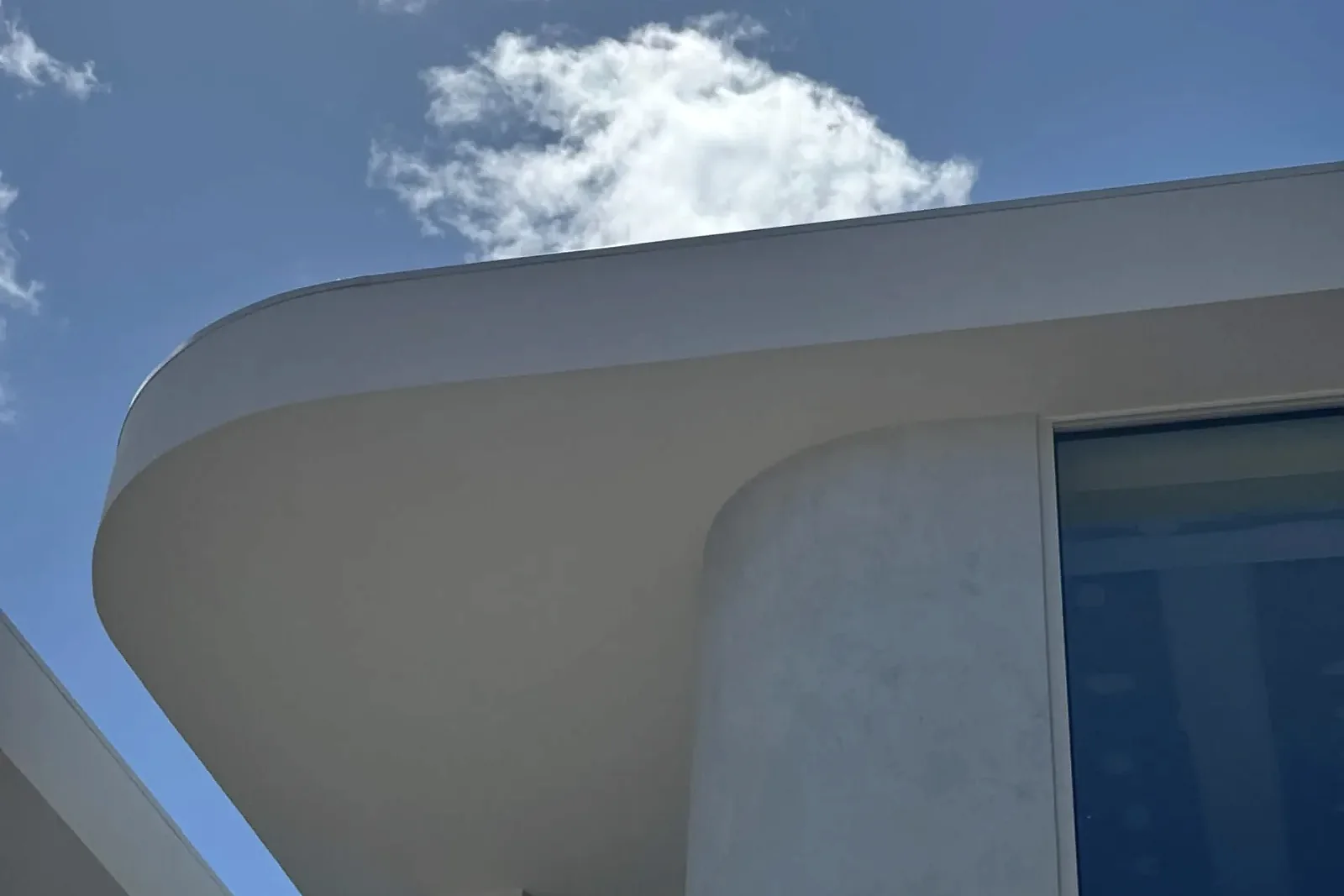
Our Adelaide rendering service page explains how we scope this work, the project planning guide lists what is useful to have ready before quoting, and the curved rendered wall case study shows one finished surface carried around a radius and into a straight parapet.
Common questions
- Will a coarse texture stop the wall cracking?
- No. A heavier profile can disguise fine surface variation, but a crack driven by substrate or footing movement will still come through. The cause needs assessment before the finish is chosen, not after the second repair.
- Can we change the texture without removing the render?
- Sometimes. It depends on what the existing surface is, how well it is bonded, and whether the new system is documented for that substrate. Going coarser is generally easier than going smoother, because a finer grade inherits the flatness beneath it.
- Which finish is the cheapest?
- Comparing textures by rate alone tells you little. Preparation, access, the number of coats and the flatness the chosen grade demands usually move the number more than the texture product does.
- Does a dark colour cost anything later?
- It can. The Rockcote maintenance guide ties repainting frequency to colour choice, exposure, application quality and location, and names dark colours and coastal environments as the combination that may need attention sooner. Some systems also document colour limits over particular substrates, so check the selected colour against the system data.
Sources and further reading
- Rockcote
- Types of render: a homeowner’s guide, choosing the best paint for rendered homes, structural movement and the maintenance guide (PDF)
- Dulux AcraTex
- Texture range, SuperTrowel 2 mm and the AcraTex systems and guides