How to Maintain Exterior Cladding in Coastal Adelaide
The short answer
There is no single coastal-cladding maintenance schedule. First identify the exact cladding product, coating and site exposure; then use the current manufacturer instructions for that system. A wash interval or cleaner approved for one product may be wrong for another.
Why coastal exposure changes the questions
South Australian building guidance uses mapped corrosion environments to help determine corrosion-protection requirements for certain building classes near the coast and breaking surf. That confirms exposure is a design and specification issue—not something to decide from the suburb name or a photograph alone.
Salt can also accumulate on surfaces that rain does not naturally wash, including areas below eaves and sheltered junctions. The relevant product, finish, distance and orientation to marine influence, surrounding terrain and how much rain reaches the wall can all affect the manufacturer guidance that applies.
Do not apply one distance threshold across every product, or use distance alone to diagnose an existing facade. For a new or replacement system, check the applicable SA map and building class as well as the product guide and local conditions. The designer, supplier and installer should work from that documented information.
Source: SA.GOV.AU corrosion-environment maps and building guidance.
Identify the system before cleaning
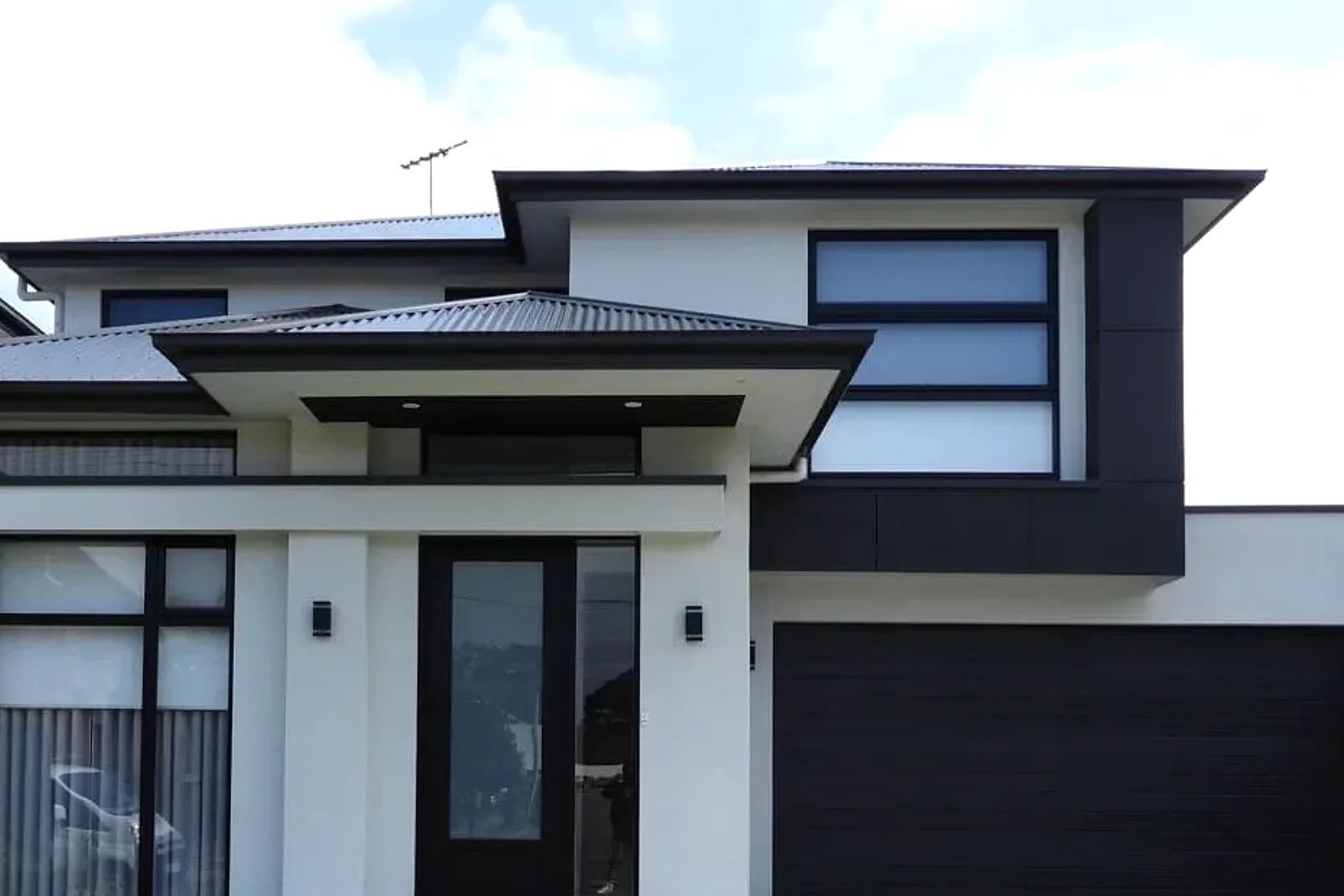
“Cladding” describes many different materials and wall build-ups. Fibre-cement boards, coated steel, aluminium, timber-derived products, composites and rendered panel systems can have different finishes, fixings, joints and care limits.
Check handover documents, invoices, drawings, warranty records and product labels before relying on appearance. Record the manufacturer, product profile, finish or coating, colour, installation date if known and any previous repair or repaint. If the product remains uncertain, ask an appropriate professional to identify it before selecting a chemical, pressure or repair method.
Australian Government guidance treats cladding as part of an interacting wall system that also includes framing, membranes, insulation and water-management details. Cleaning the visible face does not establish that the concealed wall build-up is sound.
A safe ground-level inspection checklist
Create a dated record from ground level or another safely accessible position. Include a wide view of each elevation and closer photographs that retain enough context to locate the area again.
- Product, profile and finish where these can be confirmed from records
- Staining, chalking, fading or other visible colour change
- Loose, displaced, cracked, dented or otherwise damaged boards and panels
- Visible corrosion at fasteners, cut edges, flashings or adjoining metalwork
- Open joints, split or missing sealant and changes around corners
- Junctions around windows, doors, penetrations and adjoining finishes
- Blocked or bridged drainage and ventilation openings that are readily visible
- Overflow marks, damaged gutters or downpipes and signs of active water entry
- Soil, mulch, stored materials or vegetation touching the cladding
- Areas sheltered from regular rain, including walls below deep eaves
Do not pull panels, probe concealed layers or disturb a joint to complete this check. If a defect could involve the wall behind the cladding, the appropriate assessment may need to consider the membrane, cavity, flashing, substrate and internal moisture—not just the surface mark.
Manufacturer guidance: examples, not universal rules
The examples below show why the product name matters. They apply only where that manufacturer and product family have been confirmed, and the latest product-specific manual may add or replace requirements.
- James Hardie fibre cement
- James Hardie’s general fibre-cement guidance says maintenance depends on location and exposure. It lists washing exterior surfaces every 6–12 months, periodic fastener checks, maintenance of protective finishes, and checks that joints, penetrations, flashings and sealants remain intact. It also directs owners to the paint manufacturer for coating-specific washing and recoating requirements.
- COLORBOND steel
- BlueScope’s COLORBOND maintenance page distinguishes rain-washed areas from sheltered “unwashed” areas. It says to hose unwashed areas with clean fresh water at least every six months and more often where coastal salt spray is prevalent, and to prevent soil or mulch building up against the steel. That instruction is for COLORBOND steel, not every coated metal facade.
- Other fibre cement, timber, composite or coated systems
- Find the current manual for the exact product and finish. Durability and maintenance vary with the material, coating, joints and exposure. Do not transfer Hardie or COLORBOND intervals, cleaners or repair methods to another brand or material because the surfaces look similar.
Sources: James Hardie fibre-cement maintenance guidance, COLORBOND steel maintenance guidance and YourHome cladding-systems guidance.
Cleaning boundaries worth keeping
Use only the method, water quality, detergent or cleaner, pressure, tools and rinse procedure allowed by the confirmed manufacturer. Test where its instructions require a test area. Protect nearby materials and landscaping as directed by the product information.
Do not use a pressure washer, abrasive tool, solvent, bleach, touch-up coating or generic sealant unless the current guidance for the exact product and finish expressly permits it. If the product remains unidentified or the instructions are unclear, stop and seek product-specific advice before proceeding.
Signs that need prompt professional assessment
Stop treating the issue as routine surface care and arrange an appropriate assessment if you observe:
- Loose, displaced or unstable panels or boards
- Active water entry, interior damp or recurring moisture around openings
- Damaged flashings or open joints at windows, doors, parapets or penetrations
- Significant or spreading corrosion at fixings, edges or support components
- Widespread coating loss, delamination or repeated failure after earlier work
- Movement, impact damage or distortion affecting more than the surface finish
- Any area that cannot be inspected or maintained without work at height
The right person depends on the evidence. A product supplier or coating specialist can clarify confirmed product instructions; a facade or building consultant can assess uncertain construction and water-management issues; and an engineer may be needed where support, movement or safety is in question.
Source: SafeWork SA, Working at heights.
Plan future maintenance before new cladding is installed
Maintenance is easier to manage when the project records are complete and the facade can be accessed safely. Before a new cladding or facade-replacement scope is finalised, ask the designer, supplier and installer to confirm:
- The exact cladding product, finish and documented exposure limits
- Compatible fixings, flashings, sealants and adjoining materials
- How openings, penetrations, cavities and drainage paths are detailed
- Which areas will not be naturally washed by rain
- The manufacturer’s cleaning, inspection and recoating information
- How upper levels and difficult junctions can be accessed safely later
- Which manuals, warranties, colour records and handover documents will be supplied
- Who owns each part of the facade scope and any work by adjoining trades
Tell Elite Surface Group which plans, elevations, photographs and access notes are available, along with the Adelaide project area, new-build or replacement status and proposed system if known. We can arrange how to review supporting files, check whether the proposed installation is within our service scope and identify what further information is needed to quote.
Common questions
- How often should coastal cladding be washed?
- There is no universal interval. Use the current guidance for the confirmed product, coating and exposure. A frequency published by one manufacturer should not be applied to a different system.
- Can I pressure-wash exterior cladding?
- Only if the exact product and finish instructions permit it and you can follow their limits safely. If the instructions do not expressly permit it, do not assume it is suitable.
- Does “low maintenance” mean maintenance-free?
- No. The need may be lower than for another material, but cleaning, finish care and checks of joints, fixings and water management can still apply.
- Does a rust-coloured stain prove the cladding is failing?
- No. Appearance alone does not identify the source, extent or significance of corrosion. Record the context and have the relevant materials and interfaces assessed before covering or repairing the stain.
- Can Elite diagnose an existing facade from photographs?
- Photographs and product records help with initial context, but they cannot establish the condition of concealed layers or identify every cause. Some issues need on-site or independent assessment before an installation or replacement scope is appropriate.
Sources and further reading
- Government of South Australia
- Maps to assist with technical building issues
- Australian Government YourHome
- Cladding systems
- James Hardie
- Fibre-cement maintenance guidance
- BlueScope
- COLORBOND steel maintenance guidance
- SafeWork SA
- Working at heights