Can You Render Over Painted Brick? What Adelaide Homeowners Should Confirm
The short answer
Sometimes. A compatible render or texture system may be specified over properly prepared painted masonry, but the existing paint is now part of the substrate. Its condition, bond, contamination and compatibility need to be considered alongside the brickwork, moisture history and proposed finish.
Why existing paint changes the render decision
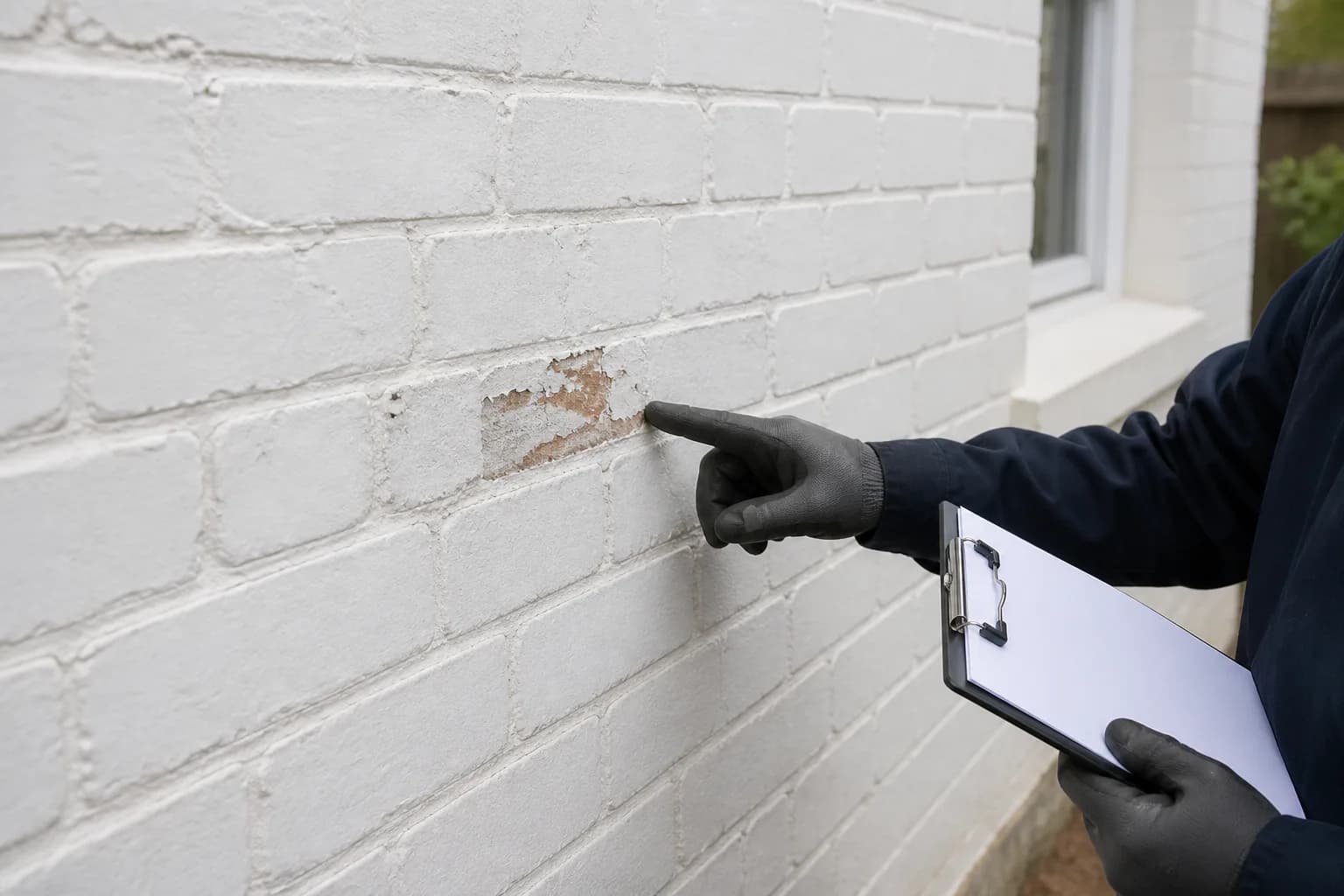
A new finish can only be as dependable as the layers supporting it. On bare masonry, the specified system interacts with the brick and mortar. On painted masonry, it may instead rely on an older coating—and on that coating’s bond to everything below.
Manufacturer information confirms that some products are designed for properly cleaned and prepared pre-painted surfaces. It also places limits on painted surfaces and calls for specialist application. That supports a careful “sometimes”, not a blanket rule that every painted wall can be rendered.
Dulux’s AcraTex SuperTrowel page directs previously painted surfaces back to a project-specific specification and substrate guide. The exact masonry, existing coating and selected finish therefore need to be considered together.
Sources: ROCKCOTE Keycote Technical Data Sheet (PDF) and Dulux AcraTex SuperTrowel substrate guidance.
Record what is known before requesting a specification or quote
Older walls often have incomplete records. The goal is not to guess a product from colour or sheen, but to separate known facts from assumptions so the assessor, product supplier and contractor can identify what still needs checking.
- Approximate property age and whether the wall is original or part of an addition
- When the exterior was last painted and any known paint, primer or coating products
- Whether the brick was painted before you owned the property
- Previous patching, repointing, crack repairs or moisture work
- Which elevations are affected and whether sheltered areas look different
- Dated wide and close photographs, including openings, corners and the wall base
- Interior damp, plumbing, gutter, downpipe, roof or ground-drainage history near the wall
- Access constraints, neighbouring boundaries and the proposed finish or colour
Plans, invoices, product containers and past maintenance records can be more useful than a confident description such as “normal exterior paint”. Our project-planning guide explains what else to send with an enquiry.
Conditions that need assessment before a finish is selected
The surface should be viewed as a connected wall, not as isolated paint chips. A contractor or specifier may need to examine more than one elevation and distinguish a local coating defect from a condition affecting the masonry or moisture path.
- Loose, flaking, blistered or chalking coating
- A visibly unstable layer should not simply be hidden. Its extent, likely cause and the selected system’s substrate requirements need to be established.
- Cracked brickwork, mortar or previous repairs
- Determine whether the line is stable, active or part of a wider movement pattern. A new finish is not a substitute for assessing the underlying wall.
- Moisture, salts, staining or persistent damp
- Water may come from several building or site conditions. The source should be investigated before a new layer reduces the visibility of the evidence.
- Soft, fretted or damaged brick and mortar
- Surface appearance alone cannot establish whether the masonry provides a suitable base. Repair advice may need to come before a decorative-finish decision.
- Junctions, movement details and openings
- Window and door edges, changes in material, additions and documented joints need to remain coordinated with the proposed finish rather than being treated as flat wall area.
If cracking is the main concern, first use our Adelaide render-cracking guide to document the pattern and identify when independent building, structural or geotechnical advice may be appropriate.
The written specification should define the complete system
“Render over the paint” is not a complete scope. Depending on the assessed condition and chosen manufacturer system, the project may retain only suitable existing layers, require removal or remediation of incompatible areas, or need a different finish strategy. That decision should come from the wall condition and current system documents—not a generic preparation recipe.
A useful written specification identifies:
- The masonry and existing coating condition it assumes
- Who confirms substrate acceptance and by what documented criteria
- The extent and limits of preparation, removal and repairs
- The compatible primer, key coat, render, texture and topcoat sequence where applicable
- Treatment of cracks, joints, corners, openings and adjoining materials
- Application conditions and inspection points from current product data
- The selected texture, colour and any documented colour limitations
- Protection, waste handling, clean-up, care and handover responsibilities
Dulux publishes separate substrate guides for clay brick, cement brick and block. Its AcraTex SuperTrowel page says previously painted surfaces depend on the project substrate and specified finish. This is why a product that can be used on one properly prepared painted surface does not become a universal approval for every painted wall.
Sources: Dulux AcraTex substrate guides, the AcraTex SuperTrowel page and the ROCKCOTE Keycote Technical Data Sheet (PDF).
Older paint, silica and planning checks belong in the scope
Lead-based paint
SA Health says properties built before 1980 are likely to contain lead-based paint and that damaged or disturbed lead paint can create an exposure risk. It strongly recommends qualified help for removal. Property age does not prove the coating on one wall, but it is a reason to identify the risk before preparation begins.
Source: SA Health, Managing lead-based paint (PDF).
Respirable crystalline silica
SafeWork SA lists bricks, blocks, mortar and cement-based products as crystalline-silica substances. Mechanical cutting, grinding, sanding and similar processing can generate respirable dust, so regulated risk assessment and controls belong in the workplace safety plan. This guide does not prescribe a removal technique.
Source: SafeWork SA respirable crystalline silica guidance.
Planning and heritage
Approval depends on the property and proposal. PlanSA directs owners to enter the address in the Planning and Design Code to see which rules and next steps apply. Heritage South Australia says changes within State Heritage Areas can require development approval and specifically includes alterations and external painting, subject to stated exemptions.
Check the address before assuming an exterior change is exempt. For a heritage place or area, seek advice from the relevant planning authority before the finish is priced as approved work.
Sources: PlanSA and Heritage South Australia, living in a State Heritage Area.
Compare what each quotation assumes—not only the finish name
Two quotes can use similar language while allocating very different preparation, repair and risk responsibilities. Ask for assumptions and exclusions in writing so the prices describe comparable work.
- Areas and elevations included, with access and protection responsibilities
- Known coating and masonry assumptions and information still required
- Who assesses substrate acceptance before the work starts
- Preparation, coating removal and repair scope, including excluded defects
- Exact specified system and every included layer
- Treatment of openings, joints, fixtures, services and adjoining finishes
- Lead, silica, waste and occupied-site controls where relevant
- Inspection, variations, clean-up, maintenance and handover documents
Material and workmanship cover may not be the same
Manufacturer warranty eligibility can depend on the specified products, substrate suitability, number of coats, correct application, registration and certificate conditions. Ask which document applies to the proposed wall and who provides any separate workmanship cover. A headline period does not prove that an existing painted substrate, preparation and every trade are covered together.
Source: Dulux AcraTex material warranty information.
Common questions
- Does all paint need to be removed before rendering?
- There is no universal answer. Some documented systems allow properly prepared painted surfaces, while unsuitable or unstable layers may require a different approach. The wall and selected system must be assessed together.
- Can a photo confirm whether the paint is sound?
- No. Photos can show visible condition and access, but cannot establish the bond between hidden layers, identify every coating or rule out moisture and masonry issues.
- Will new render stop existing wall cracks?
- A finish should not be treated as a structural repair. The crack and underlying movement need an appropriate assessment before a finish or repair system is selected.
- Does rendering painted brick need council approval?
- It depends on the address, applicable overlays and proposed change. Use PlanSA’s address-based tools and seek advice from the relevant planning authority, especially for heritage or historic places and areas.
- What should I tell Elite Surface Group?
- Tell us the suburb, property age if known, coating history, affected elevations, access notes, proposed finish and what dated photos are available. We can arrange how to review supporting files, then identify what else is needed to confirm whether the work sits within our scope.
Sources and further reading
- System and substrate guidance
- Dulux AcraTex substrate guides, previously painted surface guidance and ROCKCOTE Keycote technical data (PDF)
- South Australian safety guidance
- SA Health lead-based paint fact sheet (PDF) and SafeWork SA silica guidance
- Planning and heritage
- PlanSA and Heritage South Australia
Source pages reviewed 13 August 2026. Check current product, safety and address-specific planning information before work begins.