Fibre Cement or Timber Weatherboard? What Adelaide Homes Should Confirm First
The short answer
Fibre cement vs weatherboard cladding is not a single right answer for every Adelaide home. Both are established, standards-based exterior cladding options, and the better fit depends on whether the site sits in a bushfire-prone area, how close it is to the coast, and how much repainting the owner is prepared to plan for. The documented product—not a general preference—should decide the system.
Fibre cement vs weatherboard cladding: what actually differs
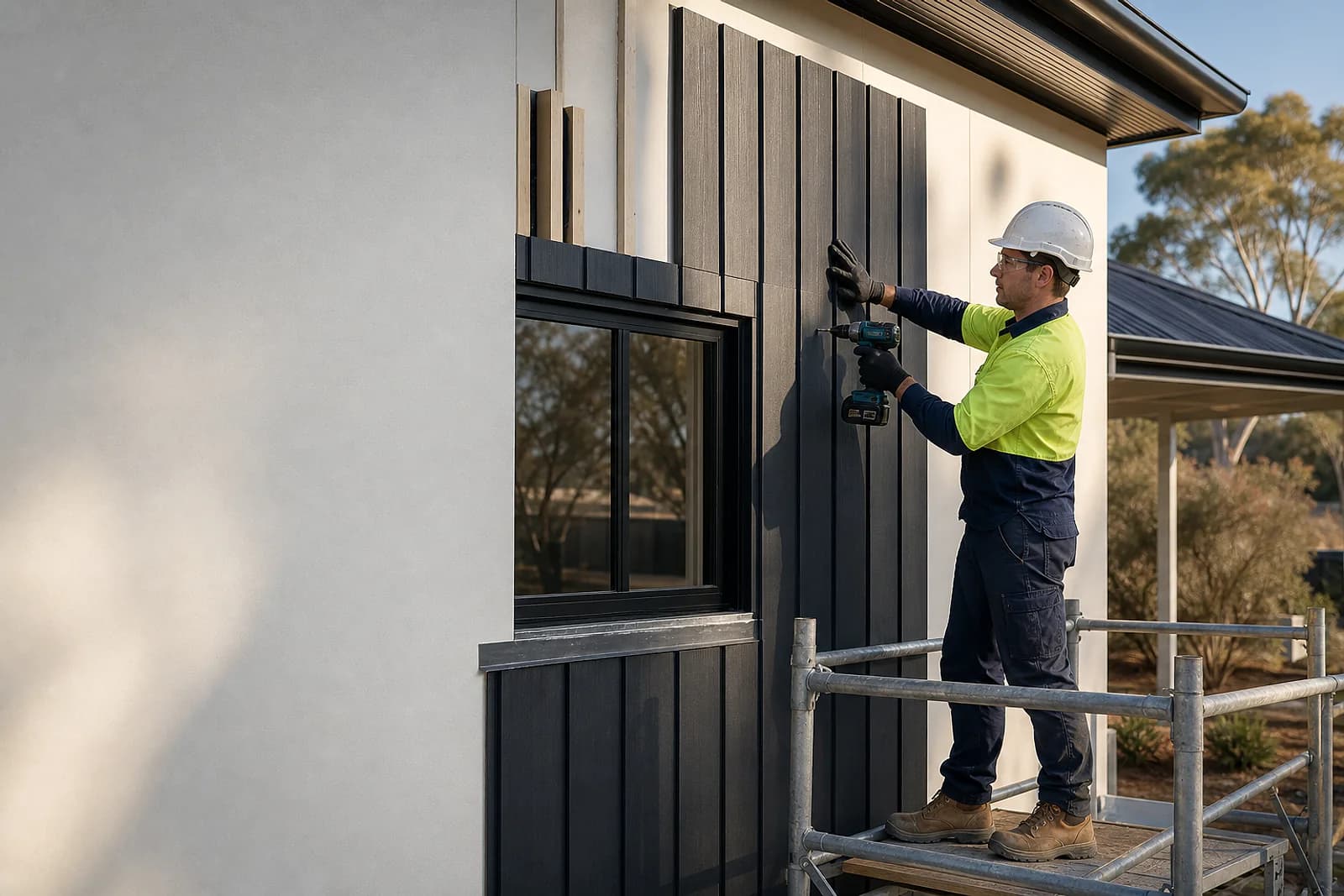
Fibre cement weatherboard is a manufactured cement-and-fibre sheet profile, cut and finished at the factory to a consistent thickness and board width. Manufacturer literature describes it as resistant to shrinking, swelling and warping compared with solid timber, and current profiles are CodeMark-certified against the National Construction Code.
Timber weatherboard covers a wider range: traditional solid timber boards, and engineered timber products made from compressed hardwood fibre and wax. Engineered boards are marketed on dimensional stability and a long rot warranty, but—like solid timber—they still rely on a sound paint or coating film for weather protection in a way fibre cement does not.
Sources: James Hardie, Linea Weatherboard product information and Weathertex, product FAQs.
Bushfire-prone zoning changes what the cladding must be
Parts of metropolitan Adelaide sit inside a designated bushfire-prone area, most visibly through the Hills Face Zone and the wider Adelaide Hills, but also across some outer suburban fringes. A property inside that overlay may need a site-specific Bushfire Attack Level (BAL) assessment under AS 3959 before the cladding, and the rest of the external wall system, can be finalised against the NCC’s construction requirements for that rating.
Fibre cement is documented by manufacturers as meeting the non-combustibility and fire-performance requirements for a wide range of BAL ratings, with specific board, jointing and fixing details tested up to the higher ratings. Timber weatherboard options are more limited at the highest ratings—only a bushfire-resisting species or a manufacturer-tested and certified system may be acceptable, and requirements tighten considerably as the rating increases toward BAL-FZ.
Sources: SA.GOV.AU, Bushfire building regulations, ABCB, NCC Part G5 Construction in bushfire-prone areas and James Hardie, Construction of Buildings in Bushfire Prone Areas (PDF).
Coastal salt exposure near Adelaide’s beaches
Suburbs such as Semaphore, Grange, Henley Beach, Glenelg and Brighton sit close enough to the coast that airborne salt can affect fixings, coatings and paint film faster than an inland suburb of the same age. Manufacturer guidance for both fibre cement and engineered timber weatherboard generally recommends closer inspection, more frequent washing and coastal-rated fixings within a defined distance of the coastline—the exact distance and product-specific conditions vary, so the current warranty and installation literature for the selected product should be checked rather than assumed.
- The property's approximate distance from active surf or salt-laden air
- Whether the chosen product's warranty sets closer coastal conditions
- Fixings, flashings and trims rated for the same exposure as the cladding
- A realistic washing and inspection routine for the finish and colour selected
Source: Weathertex, What weatherboards are best for coastal areas.
Maintenance and repainting expectations
Adelaide’s hot, dry summers and strong UV exposure age a painted exterior faster than a milder climate does, whichever cladding sits underneath the paint film. Fibre cement and engineered timber weatherboard both need a maintained coating system—regular washing, prompt attention to chips or scratches at joints and corners, and repainting on the cycle the coating manufacturer documents for the finish and exposure selected.
Solid timber weatherboard adds movement and moisture considerations that fibre cement does not usually share to the same degree: timber can swell, shrink and check with seasonal moisture change, so joints, end grain and any exposed fixings need particular attention during routine checks. None of this is a reason to avoid timber outright—it is a reason to confirm the specific coating system and maintenance schedule documented for the product before installation, not after a problem appears.
What to confirm before the cladding is locked in
A useful fibre cement vs weatherboard decision rests on project-specific documents, not a general comparison. Before committing, confirm the following with the designer, supplier or building surveyor.
Confirm the bushfire overlay status
Check whether the site sits within a designated bushfire-prone area, and if so, obtain the assessed BAL rating before a cladding product is finalised.
Match the product to the coastal distance
Confirm the manufacturer’s coastal conditions and recommended fixings against the property’s actual distance from the coast, not the suburb name alone.
Read the current warranty and coating requirements
Warranty terms, priming requirements and repaint intervals are set by the specific product and finish selected, and they change between manufacturers and profiles.
Check whether council or PlanSA approval applies
Changing external cladding on an existing building can require development approval depending on the work and the property; confirm this on the PlanSA portal or with the local council before ordering material.
Confirm the complete wall build-up
Thermal, acoustic and weatherproofing performance depend on the whole wall assembly—frame, sarking, battens and cladding together—so confirm the documented build-up rather than the cladding product alone.
Our project-planning guide covers the wider information that helps turn an early cladding question into a clear installation scope.
Source: PlanSA, Getting approval.
Common questions
- Is fibre cement always the safer bushfire choice?
- It is documented as compliant across a wider range of BAL ratings than most timber weatherboard, but the assessed BAL rating for the actual site still needs to be confirmed before any product is chosen or assumed suitable.
- Does engineered timber weatherboard need less maintenance than solid timber?
- Manufacturers generally market engineered boards on improved dimensional stability, but both still rely on a maintained coating system. Confirm the specific product data rather than assuming either timber option is maintenance-free.
- Can Elite Surface Group choose the cladding product for us?
- No. Product selection depends on bushfire zoning, coastal exposure, budget and design intent, which sit with the project’s designer or the homeowner. We install the documented system and can discuss coordination once that selection is confirmed.
Sources and further reading
- SA.GOV.AU
- Bushfire building regulations
- Australian Building Codes Board
- NCC Part G5 Construction in bushfire-prone areas
- James Hardie
- Construction of Buildings in Bushfire Prone Areas (PDF) and Linea Weatherboard product information
- Weathertex
- What weatherboards are best for coastal areas and Product FAQs
- PlanSA
- Getting approval